
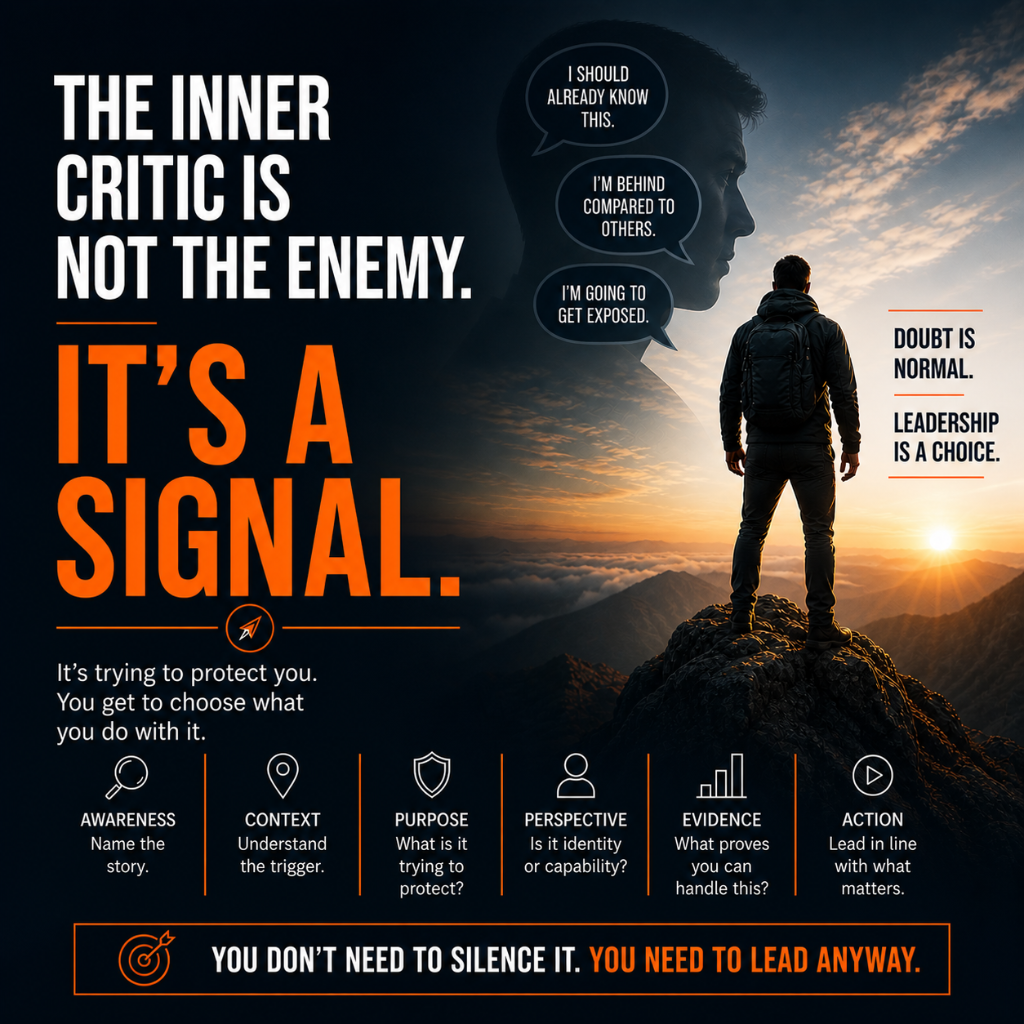
The Inner Critic is not the Enemy
Most leaders I work with don’t have a capability problem.
They mis-read the signal.
That voice in your head—
▪️ “I should already know this”
▪️ “I’m behind”
▪️ “I’m going to get exposed”
That’s not proof, truth or even fact.
It’s a signal.
And here’s the mistake:
Leaders treat it as truth instead of asking what it’s pointing to.
Because most of the time, it’s signaling:
▪️ You’ve stepped into a bigger role
▪️ The stakes are higher
▪️ The answers aren’t obvious
▪️ You’re operating with less certainty
In other words: the game changed
⚠️ The risk isn’t the signal. It’s how you respond to it.
I see it show up like this:
▪️ Over-preparing instead of deciding
▪️ Over-talking instead of listening
▪️ Avoiding hard conversations
▪️ Holding control instead of delegating
Now it’s not internal anymore.
It’s impacting your leadership.
Here’s the shift:
👉 Don’t silence the signal
👉 Interpret it correctly
Ask:
• What is this actually pointing to?
• Is this about capability or identity?
• What do I know how to do right now?
• What behavior matters most in this moment?
Confidence isn’t the goal.
Self-trust under uncertainty is.
And strong leaders don’t wait for the signal to go quiet…
They learn how to lead anyway.
If this is showing up in your leadership right now, especially as your scope or visibility increases,
Let’s talk.
I work with C-suite and senior leaders to strengthen how they show up under pressure – especially when the stakes are high and the signal gets loud.
If you’re open to a conversation, reach out or schedule time to connect.
I’d welcome the discussion.
John